Pipe Filters Compared: 6mm, 9mm and Unfiltered Systems
A practical look at how 6mm, 9mm and unfiltered pipes differ in draw, moisture and flavor — and how to...

A tin of tobacco is a small promise: a few weeks of good smokes, if you treat it well. Leave it open on the desk overnight and you meet the other side of that promise — crumbs, harshness, and a bowl that burns hot no matter what you do. Storage is one of those quiet skills that separates a shelf of blends you enjoy from a shelf of blends you regret. The good news is that it takes very little gear and two or three habits to get right.
If you're working through a 50g tin in two or three weeks, the tin is your storage. No jar needed.
But "the tin" means a tin that closes properly. Round 100g tins with a plastic lid and an inner card seal usually do. Square vacuum-sealed tins stop being airtight the moment you crack them, and the foil liner rarely goes back the way it came.
For an open tin in rotation:
Transfer to glass when any of these is true: you bought in bulk, you want to age a blend, you've opened a tin you won't finish in a month, or you like to keep six blends going at once.
Jars do three things tins don't. They reseal reliably, they let you see what's happening without opening anything, and they hold a stable environment for years rather than weeks.
Some blends deserve jars sooner than others. Aromatics and latakia-heavy English mixtures are the most fragile — the very things that make them interesting are the things that leave first. A tin of vanilla custard aromatic that's been open six weeks tastes like sweet air and hay. The same blend jarred the day you opened it still tastes like dessert next month.
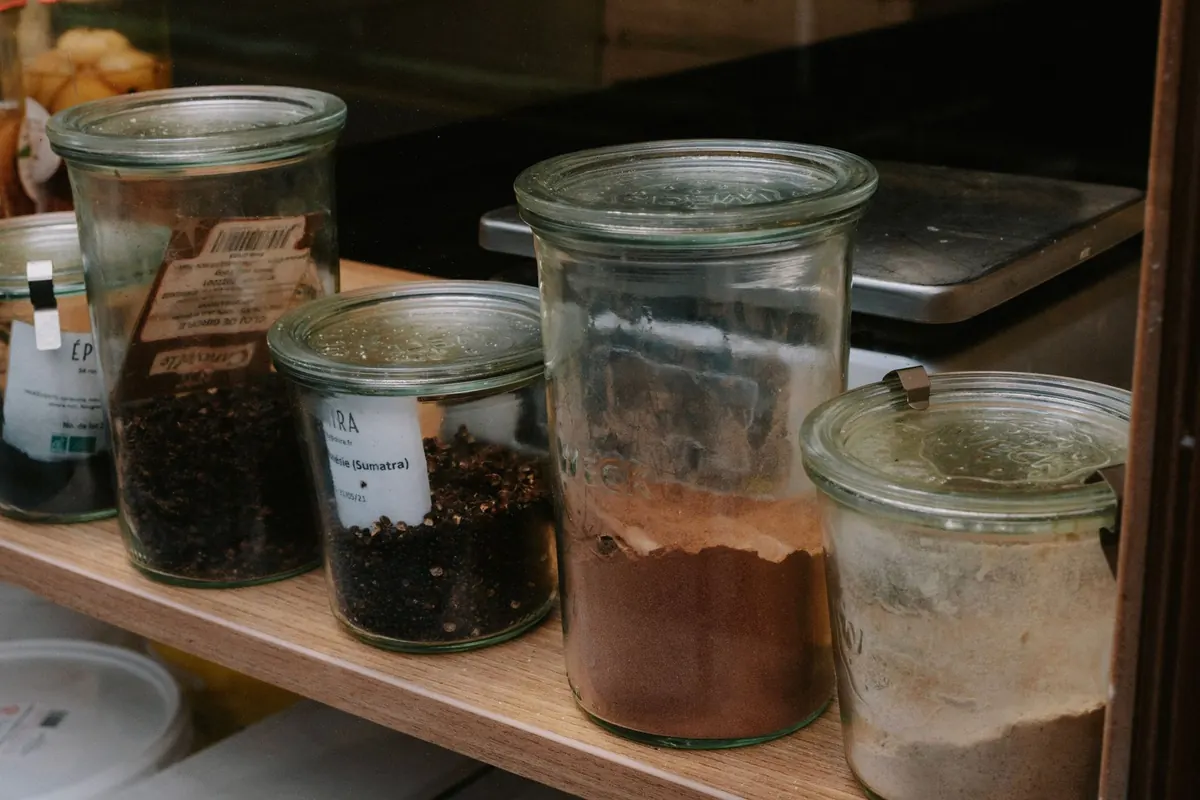
Glass, not plastic. Mason jars with two-piece lids are the standard for good reason. Bail-top jars with a rubber gasket work too, and you can replace the gasket when it hardens. Plastic tubs are usually not airtight, and some will pull aromatics into the plastic itself.
Then:
On size, a half-pint jar holds roughly an ounce of ribbon cut; a pint holds about two. Flakes and plugs eat more room because of the gaps between slices.
The honest answer is that it depends on the blend more than the jar.
Straight Virginias, Virginia/perique mixtures and pressed Virginia flakes are the classic agers. Sealed and kept cool, many pipers find they round off and deepen over five years, and some prefer them at ten. There's no universal timetable, and no guarantee you'll like the result.
Latakia is the loudest example. That campfire note softens with time, and after several years an English mixture can taste like a shadow of itself. If you love the smoke, smoke it fresh — within a year or two of opening.
Aromatics behave similarly. Toppings fade faster than the leaf beneath them, so buy them in quantities you'll actually smoke rather than cellaring them for a decade. Burleys sit in the middle: slow to change, hard to ruin.
Drying isn't only water leaving. As moisture evaporates it carries oils and aromatic compounds with it. What's left behind is leaf that burns fast and hot, tastes thin or sharp, and loses the roundness that made it worth buying in the first place. A Burley that's gone dry just tastes rough. A Virginia/perique that spent a month open on a sunny shelf is a different tobacco entirely — the sweetness is gone and the perique turns to pepper with nothing behind it.
This is why "it's still smokeable" isn't the same as "it's still good." You can light dry tobacco. You just won't get much back.
You can rescue most dry tobacco, but not all of it. If it crumbles to dust between your fingers and smells like nothing at all, it's gone. If it's merely crisp and still has some aroma, there's hope.
Add moisture slowly. You can always add more; you can't take it back.
Overdo it and you get mold, which is a one-way ticket to the bin. If you see white fuzz or smell ammonia, throw it out. Don't try to smoke around it.
Tobacco likes the same thing you do: cool, stable, and not too dry. Big swings in temperature are worse than a steady number that's slightly warmer than ideal. A jar that sits at 68°F all year will treat a blend better than one that bounces from 55°F to 80°F with the seasons.
For long-term storage, aim for around 60–65% relative humidity inside the jar. A small hygrometer costs a few dollars and takes the guesswork out. If your house drops below 40% in winter — common with forced-air heat — jars will slowly lose moisture even when sealed well. A Boveda pack in each jar solves it.
A few quick rules:
None of this requires a special room or a shelf full of gear. Dry jars, a dark cupboard, a few labels, and the habit of closing the lid — that's the whole system. Do it for a month and it becomes automatic. Do it for a year and you'll notice the difference every time you pack a bowl.
Photo: Mathias Reding / Pexels
A practical look at how 6mm, 9mm and unfiltered pipes differ in draw, moisture and flavor — and how to...
Pipe clubs are where pipe smokers trade blends, advice, and quiet company. Here's how to find one nearby,...
Aromatic, English, casing, topping, flake: a plain guide to what pipe tobacco labels actually describe,...